
01
Building the core
A wooden or pressed-bamboo core is wrapped in cloth and sealed with raw lacquer mixed with alluvial soil, forming the stable base of every piece.
- 01
Handcrafted lacquer · Hanoi
A finished piece of lacquerware passes through dozens of stages: building the core, priming, coating, wet-sanding and polishing. None of them can be hurried.
Vietnamese Lacquer Art
Lacquer painting is a hallmark of Vietnamese fine arts, crystallizing traditional mastery preserved across generations.
A painstaking journey from raw natural lacquer through the artisan's hands, creating artworks of distinct cultural and aesthetic value.
Artisan & Traditional Natural Lacquer Craft
Artisan Vu Huy Men is a devoted torchbearer of Ha Thai village, dedicating his life to preserving natural lacquer painting techniques.
His artworks blend traditional lacquer with personal creativity, creating rich depths while steadfastly upholding authentic heritage.
Lacquer process
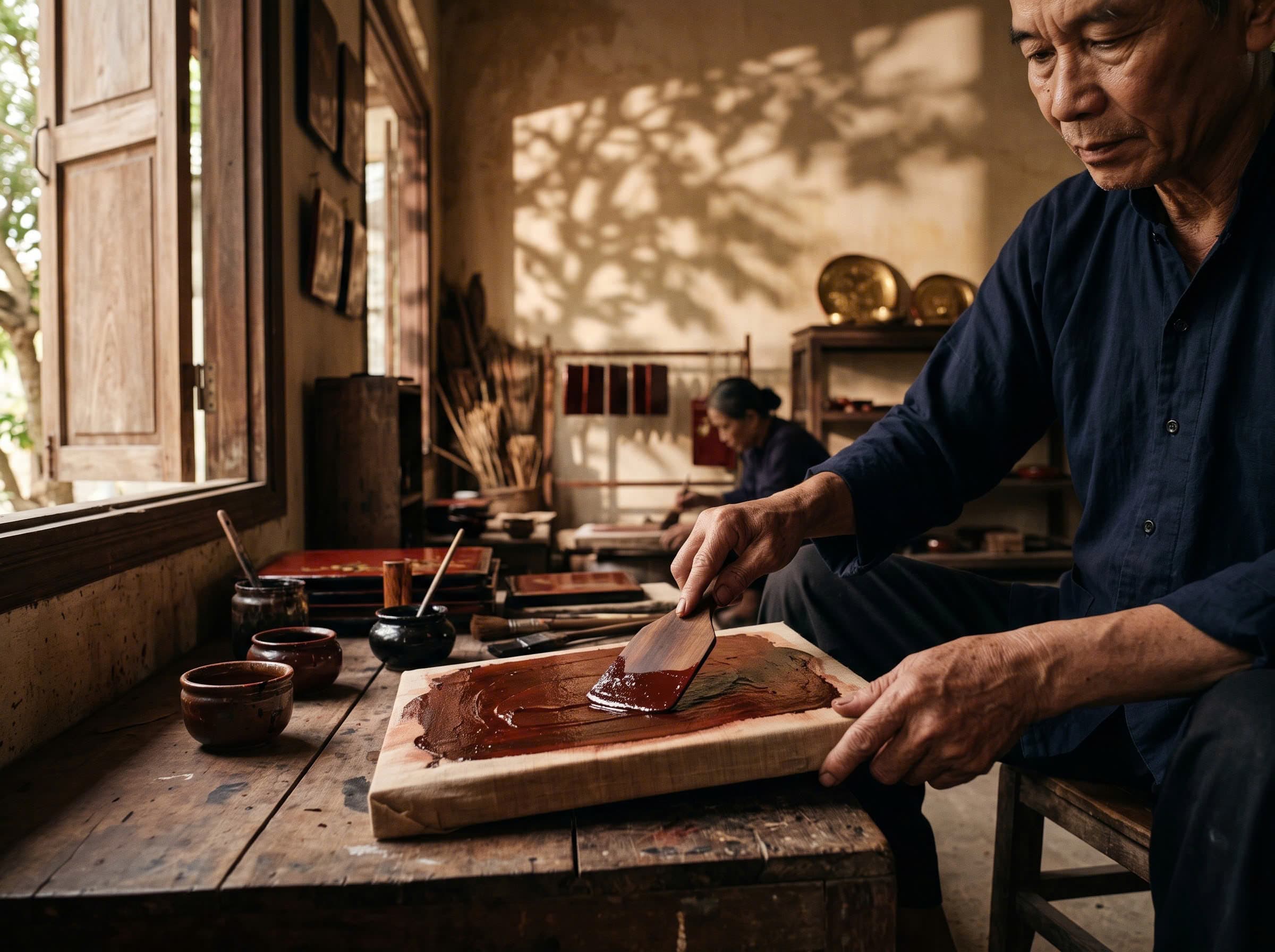
01
A wooden or pressed-bamboo core is wrapped in cloth and sealed with raw lacquer mixed with alluvial soil, forming the stable base of every piece.
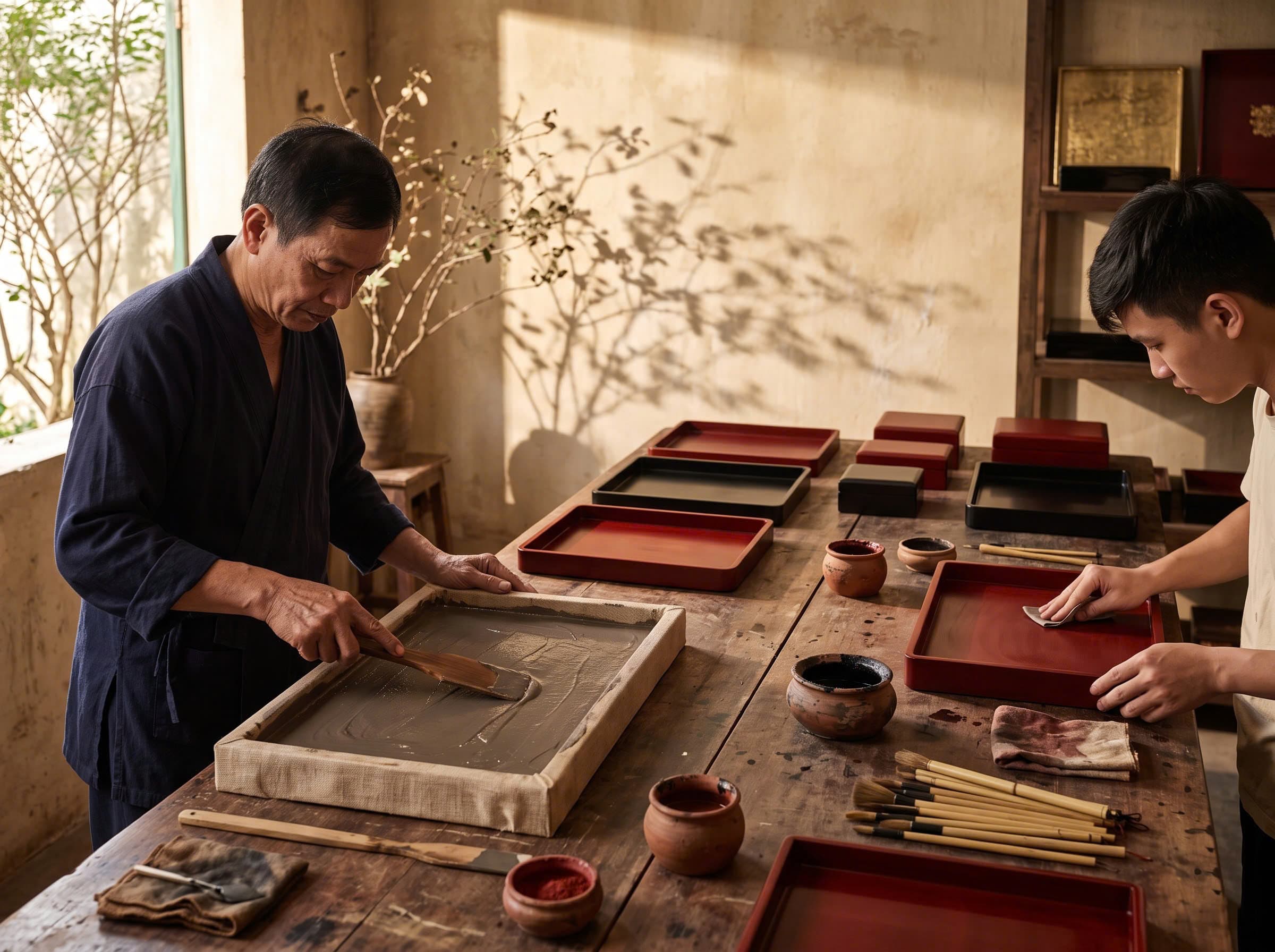
02
Layer after layer of priming lacquer goes onto the core; each must dry naturally in a humid curing room for days before it is sanded flat.
03
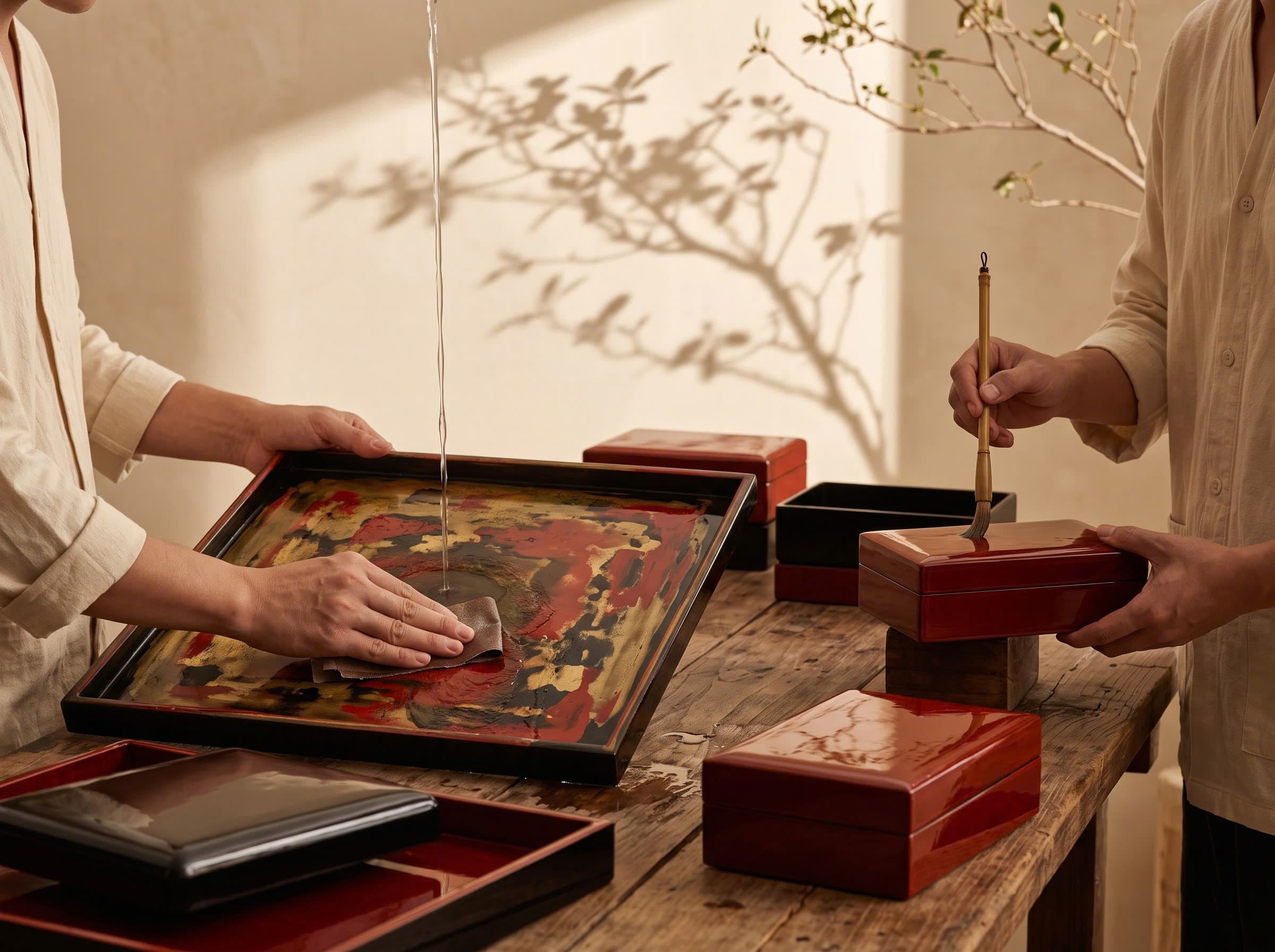
Coloured lacquer is applied and then sanded by hand under water. This cycle of coating and sanding gives lacquerware its signature depth.
04
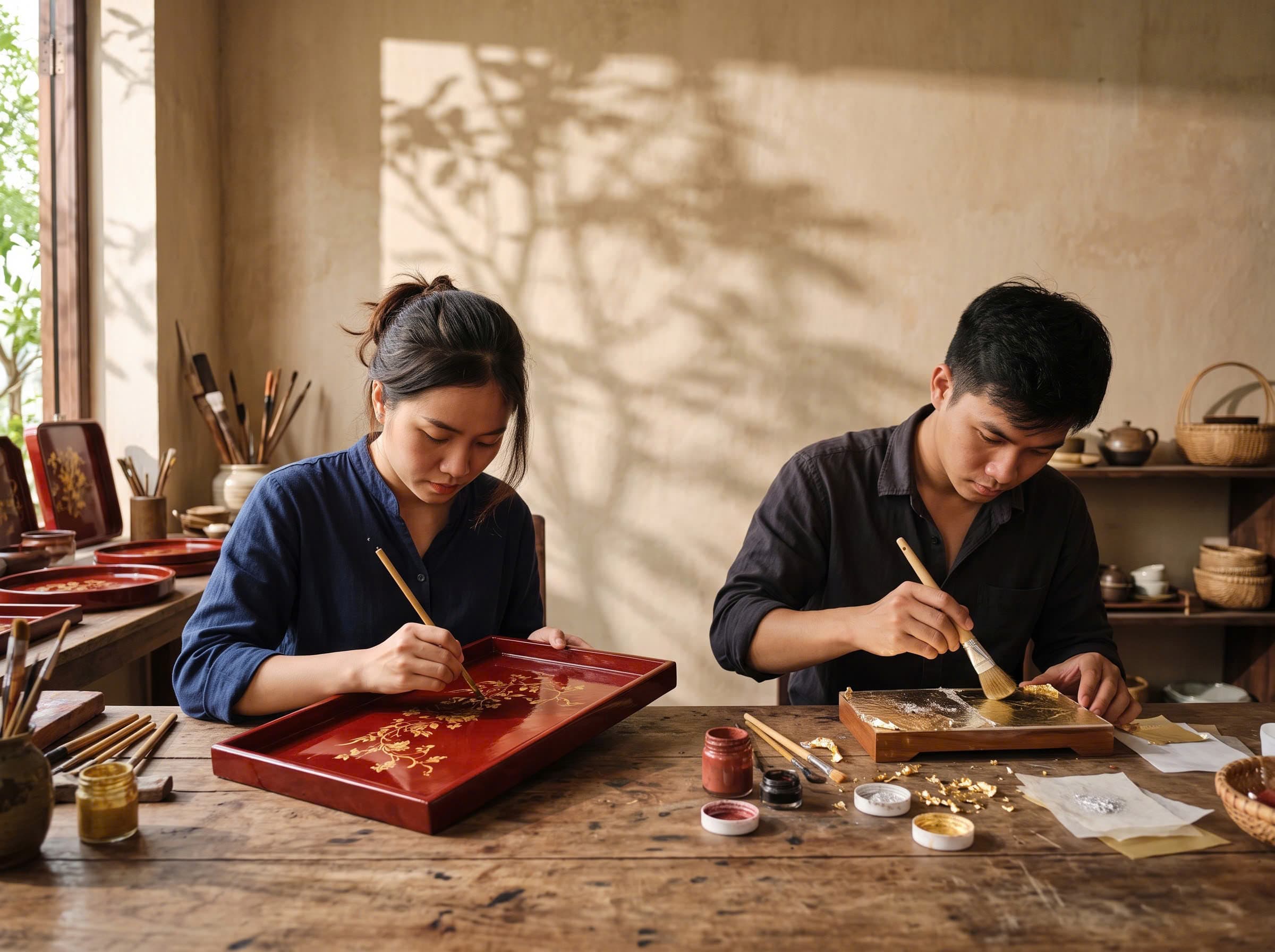
Depending on the design, artisans inlay eggshell or mother-of-pearl, or apply gold and silver leaf — every detail set by hand.
05
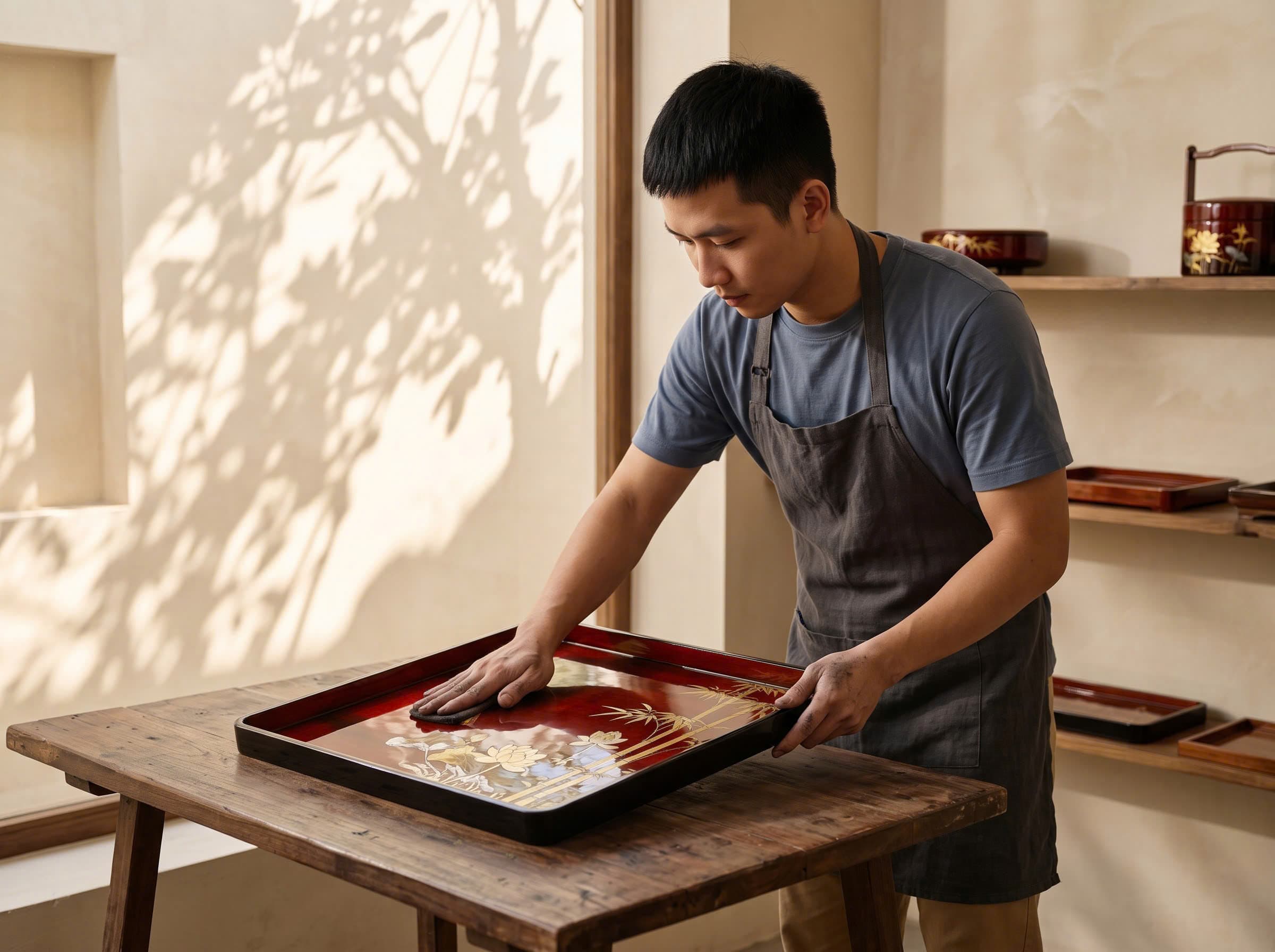
The surface is polished by hand until it holds the depth of still water, then inspected one last time before leaving the workshop.
Handcrafted lacquer · Hanoi
Tell us what you are looking for — a collection in stock, a custom design or an export order. The Red Door team will get back to you as soon as possible.